[stock-market-ticker symbols=" ^NYA;CRYPTO:BTC;CRYPTO:ETH;CRYPTO:USDT;CRYPTO:USDC;CRYPTO:BNB;CRYPTO:ADA;CRYPTO:XRP;CRYPTO:SOL;CRYPTO:DOGE " stockExchange="NYSENASDAQ" width="100%" transparentbackground=1 palette="financial-light"]

Home Blog

Freedom Capital Markets’ Strategist on Stocks to Watch Heading Into 2026

0

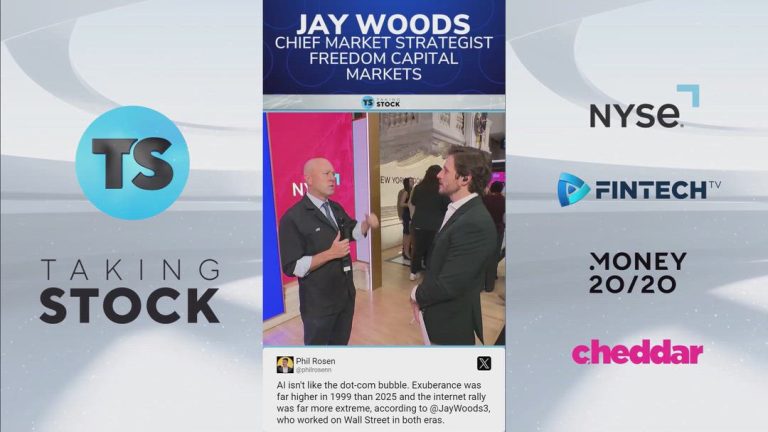
Jay Woods, Chief Market Strategist at Freedom Capital Markets, recently shared his outlook on the economy and equity markets as investors prepare for 2026. Against a backdrop of shifting inflation data, Federal Reserve uncertainty, and evolving sector leadership, Woods outlined where market participants may find both opportunity and risk in the year ahead.

Woods began by addressing the latest consumer price index data, which surprised markets by falling to 2.7%, below expectations of 3.0%. While the decline fueled optimism around potential Federal Reserve action, Woods cautioned against drawing firm conclusions from a single data point. He stressed that inflation trends require confirmation over multiple readings before policymakers are likely to pivot.

Federal Reserve independence remains a central theme as Jerome Powell approaches the final phase of his tenure. According to Woods, Powell is likely focused on preserving the Fed’s credibility and securing a legacy defined by a successful soft landing. With lingering disruptions from a recent government shutdown complicating economic data, Woods noted that determining a clear path toward a January rate cut remains difficult.

Turning to equities, Woods highlighted several stocks attracting investor attention as the calendar turns. Micron Technology posted a strong quarterly performance, yet its stock has struggled to reclaim prior highs. Woods said this disconnect raises broader questions about the semiconductor sector, particularly as stocks like Broadcom and Nvidia consolidate after substantial gains. These patterns suggest a market digesting outsized performance rather than signaling a fundamental breakdown.

Woods also pointed to strength in transportation stocks, singling out FedEx, which has risen roughly 33% over the past six months. He suggested the stock is worth close monitoring as transportation averages begin to show renewed momentum. In parallel, Woods noted improving technical signals in defensive names such as General Mills, which recently broke a prolonged downtrend. These moves reflect investor efforts to balance growth exposure with stability amid macro uncertainty.

Tesla emerged as a standout name heading into 2026. Woods expects meaningful volatility and potential upside, particularly as Elon Musk returns to a more active leadership role. He also cited the possibility of a SpaceX IPO as a catalyst that could reshape investor sentiment around Tesla. Woods framed the stock as one that could regain leadership status if execution aligns with renewed strategic focus.

Overall, Woods emphasized the importance of discipline as markets transition into the new year. Economic signals remain mixed, sector leadership is rotating, and investor sentiment continues to adjust to a world shaped by policy uncertainty and technological disruption.

As blockchain, AI, and impact investing gain prominence alongside traditional financial metrics, Woods’ analysis underscores the need for diversified portfolios. Stability, selectivity, and openness to innovation will be essential as investors navigate the evolving market landscape of 2026.
Algorand Targets Financial Inclusion With Fast, Low-Cost Blockchain

0

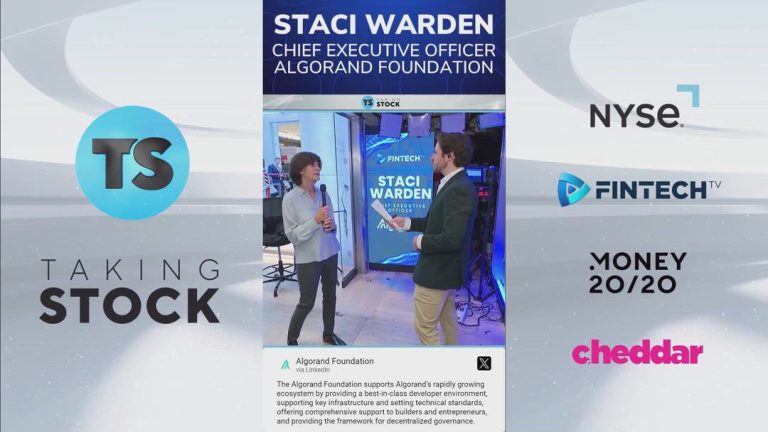
Staci Warden, CEO of the Algorand Foundation, recently joined FintechTV to discuss the growing role of blockchain technology in financial empowerment and global payments. As one of the earliest blockchain networks, Algorand continues to focus on reducing barriers to financial access while enabling fast, low-cost transactions that operate without reliance on traditional banking systems. Warden outlined how Algorand is positioning itself to meet real-world financial needs while addressing emerging challenges in the cryptocurrency landscape.

Algorand is often described as an original blockchain, having been built with financial inclusion as a core design principle rather than an afterthought. Warden emphasized that the network’s speed and efficiency are already delivering tangible results. She pointed to humanitarian payment platforms such as HesabPay, which uses Algorand infrastructure to distribute roughly 50,000 aid payments into Afghanistan. These use cases highlight Algorand’s ability to support large-scale, real-world financial activity while maintaining accessibility for everyday users.

Beyond payments, Algorand is increasingly enabling access to complex financial instruments for retail participants. Warden highlighted Lofty AI, a platform that allows users to invest in tokenized real estate and earn rental income with minimum investments as low as $50. This model of fractional ownership illustrates how blockchain can expand participation in wealth-building opportunities that were historically limited to institutional or high-net-worth investors. Such innovations align closely with Sustainable Development Goals (SDGs) centered on financial inclusion and economic opportunity.

Warden also addressed ongoing volatility in the cryptocurrency market, comparing price fluctuations to Adam Smith’s concept of the invisible hand. She noted that recent downturns driven by macroeconomic developments, including tariff concerns raised by the former President of the United States, demonstrate how external policy shifts continue to influence crypto markets. Warden observed that technology-focused investors often overlap across sectors, stating that AI-focused investors and crypto-focused investors tend to be closely aligned in their risk appetite and capital allocation decisions.

A significant portion of the conversation focused on the long-term security of blockchain networks, particularly in light of advancements in quantum computing. Warden acknowledged that practical quantum capabilities could emerge within the next 5 to 10 years, posing potential risks to cryptographic systems. She emphasized that Algorand was designed by a leading cryptographer with quantum resistance in mind, giving the network an advantage in preparing for future threats. Ensuring that wallets and surrounding infrastructure remain quantum secure, she noted, will be a critical priority across the industry.

Warden’s perspective reflects confidence in blockchain’s durability and adaptability. Algorand’s emphasis on speed, security, and inclusivity positions the network to serve as foundational infrastructure for next-generation financial systems. As interest in sustainable investing grows, blockchain platforms that deliver measurable social impact while maintaining technical resilience are likely to gain increased attention from both institutions and entrepreneurs.

Overall, Staci Warden’s insights underscore Algorand’s commitment to building financial systems that are efficient, inclusive, and future-proof. By expanding access to payments, investment opportunities, and secure digital infrastructure, Algorand continues to align technological innovation with global economic needs.

As financial markets evolve alongside advances in AI, blockchain, and digital assets, leadership focused on long-term stability and inclusion will remain essential. Algorand’s trajectory under Warden reflects a broader shift toward responsible innovation, positioning the network as a key participant in the future of global finance.

Inside Xen’s Rise as a Global Marketing Platform for Gaming

0

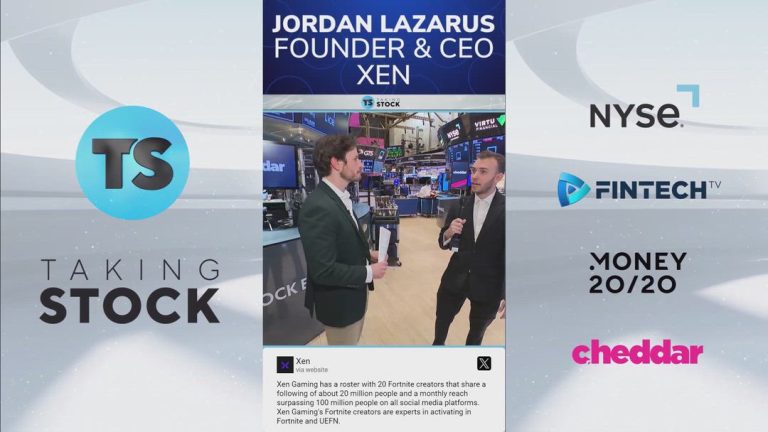
Jordan Lazarus, founder and CEO of Xen, recently shared his journey from launching a company in a basement to building a global gaming brand that now reaches more than 45 million followers. In an interview on the trading floor, Lazarus explained how Xen has reshaped the way gaming creators connect with major brands, closing long standing gaps and providing operational support that allows talent to scale sustainably.

Lazarus began Xen while studying finance and investments in Manhattan, initially planning for a career on Wall Street. After graduating, he chose instead to commit fully to his growing business. What started with roughly 3 million followers has since expanded dramatically, generating millions of monthly views and establishing Xen as a major force in gaming and entertainment marketing. The company’s growth, Lazarus noted, is driven not only by audience size but by meaningful influence and measurable impact.

Xen’s partnerships with global brands including Disney, Amazon, and Walmart underscore its effectiveness in the marketplace. Lazarus detailed how Xen supports brand marketing within gaming ecosystems by managing top creators across titles such as Fortnite and Call of Duty. The firm ensures campaigns reach highly targeted audiences, a precision approach that differentiates Xen from traditional influencer agencies. Understanding the priorities of both creators and corporate partners has become a central pillar of the company’s strategy.

Relationship building remains core to Xen’s business model. The firm acts as infrastructure for creators, providing access to brand opportunities that many would struggle to secure independently. By handling legal negotiations, communications, and deal execution, Xen allows creators to focus on content while unlocking scalable revenue opportunities. This full service structure positions Xen as a centralized partner for creators navigating an increasingly complex digital economy.

The challenges facing creators today continue to shape Xen’s mission. Lazarus emphasized that many gamers possess significant reach but lack the tools to monetize it effectively. Xen aims to address that imbalance by connecting creators with brands that recognize the value of gaming audiences. This approach reflects broader shifts toward entrepreneurship, financial literacy, and creator led business models in the digital age.

A recent milestone highlighted Xen’s momentum. Lazarus pointed to the company’s performance at the FNTS Fortnite Championship in Lyon, France, where the Xen team placed fifth against top competitors without any external funding. The result underscored both operational discipline and the viability of creator driven organizations competing on a global stage.

Looking ahead to 2026, Lazarus outlined a clear objective: enabling creators to pursue gaming as a sustainable full time career. As the gaming industry continues its rapid expansion, Xen is positioning itself to support long term growth through structured partnerships, financial access, and brand alignment.

Jordan Lazarus’s trajectory reflects the evolving intersection of technology, finance, and entertainment. As digital platforms, crypto, and blockchain technologies continue to reshape monetization and ownership models, companies like Xen are helping define the future of work in gaming. By combining scale, strategy, and creator empowerment, Xen is shaping how success is built in the modern digital economy.

Solana Startup Decal Simplifies Stablecoin Payments for Real World Commerce

0

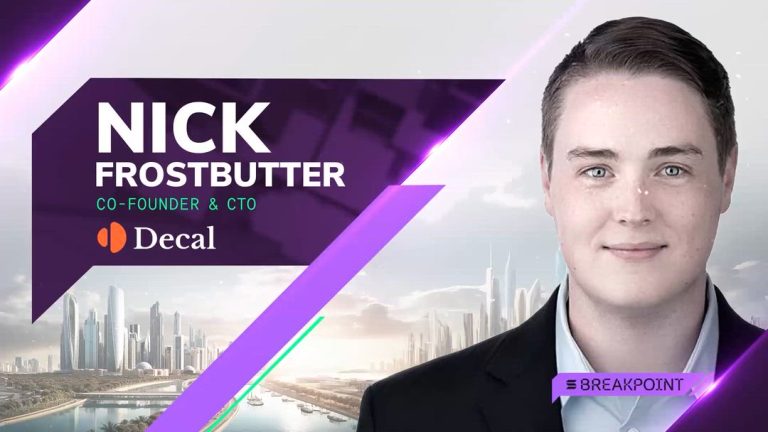
At Solana Breakpoint in Abu Dhabi, a conversation with Nick Frostbutter, co founder and CTO of Decal, offered insight into how the company is positioning itself at the intersection of blockchain technology and everyday commerce. Emerging from the Solana ecosystem, Decal is focused on simplifying payment experiences and making decentralized finance practical for real world use.

Frostbutter and his co founder began their collaboration while working at the Solana Foundation, where they were involved in several initiatives, including the launch of the Blinks protocol. During that time, they repeatedly encountered a common issue. Companies building on Solana often ignored guidance on how to properly use the blockchain’s capabilities. That frustration became the catalyst for founding Decal, with the goal of addressing inefficiencies in how crypto payments are implemented.

A central theme of the discussion was the need to move beyond the crypto native audience. Frostbutter emphasized that Decal is designed to reach users outside the traditional crypto bubble, targeting people engaged in everyday transactions. The company’s vision centers on making stablecoins usable in routine commerce, rather than limiting them to niche financial applications.

Decal’s smart payment solution was highlighted as a core innovation. Paying with stablecoins typically requires users to manage token swaps, gas fees, and compatibility issues. Decal removes these obstacles by abstracting the complexity from the user. With its smart payment system, users can tap and pay without needing to know which stablecoin is being used or how fees are handled behind the scenes. The result is a smoother, more familiar payment experience.

Currently, Decal supports the top five USD backed stablecoins on the Solana blockchain. Its routing engine is built to accommodate additional stablecoins as they emerge, allowing for seamless expansion. Frostbutter also outlined the company’s near term roadmap, which includes expanding the Decal mobile app to both Google and Apple app stores.

Beyond mobile payments, Decal is working toward deeper merchant integration. The team is developing point of sale compatibility with established systems such as Square and Clover. This would allow merchants like coffee shops and bookstores to accept stablecoin payments directly, without changing their existing infrastructure.

Decal’s approach reflects a broader push to demonstrate how blockchain technology can function alongside traditional financial systems. By prioritizing user experience and simplicity, the company is positioning stablecoins as a practical payment option rather than a speculative asset.

Frostbutter’s journey from protocol development to product execution underscores how industry experience can translate into meaningful innovation. Decal’s focus on everyday usability highlights the growing demand for crypto solutions that solve real problems.

As finance continues to evolve, efforts like Decal’s align with broader goals around financial inclusion and accessibility. By lowering barriers to digital payments, the company contributes to a more connected global economy and supports the long term adoption of blockchain based financial tools.

Auros Explains Why Liquidity Remains Crypto’s Biggest Bottleneck

0

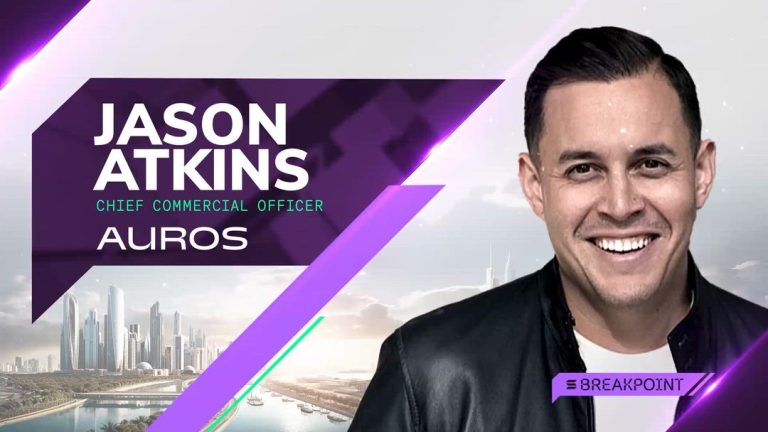
At Solana Breakpoint in Abu Dhabi, conversations around institutional crypto adoption took center stage. FintechTV contributor Rachel Pether sat down with Jason Atkins, Chief Commercial Officer of Auros, to discuss why liquidity remains one of the most critical challenges facing the digital asset market and how growing institutional interest is reshaping the ecosystem.

Atkins opened the discussion by underscoring the foundational role liquidity plays in crypto markets. Over the past two years, institutional interest has accelerated, highlighted by the approval of multiple cryptocurrency ETFs. While retail investors have long participated in digital assets, Atkins emphasized that the next phase of adoption depends on onboarding institutions such as sovereign wealth funds and real money asset managers. These investors operate with longer time horizons and significantly lower tolerance for volatility, making deep and consistent liquidity essential.

Institutional investors, Atkins explained, approach crypto differently from retail traders. Volatility remains a key concern, and insufficient liquidity can amplify price swings. Without strong liquidity infrastructure, large capital allocators are less willing to commit meaningful exposure. Addressing this imbalance is central to enabling broader institutional participation and market stability.

The conversation also touched on the significance of Abu Dhabi as the setting for Solana Breakpoint. Atkins noted that the region reflects a growing commitment by the Solana Foundation to expand institutional adoption in the Middle East. He described Solana as more than a blockchain network, characterizing it as a high performance environment designed for scale, low transaction fees, and efficiency. These attributes reduce friction for institutional participants and support a more balanced market structure.

Atkins and Pether explored how high throughput blockchains could reshape payment infrastructure. The ability to process large volumes of transactions quickly and affordably opens the door for crypto based payments to integrate with existing systems such as Visa and Mastercard. For real world applications to succeed, blockchain networks must deliver speed, reliability, and cost efficiency, positioning platforms like Solana as key enablers.

Beyond liquidity, Atkins addressed other barriers to institutional adoption, particularly regulatory uncertainty. The crypto industry remains early in its development, with regulatory frameworks continuing to evolve across jurisdictions. As major financial institutions such as BlackRock and JP Morgan explore crypto products, clearer regulatory pathways are expected to emerge. Greater clarity could lower entry barriers for institutions and accelerate mainstream adoption.

Geographic expansion was another focal point of the discussion. Atkins expressed optimism about growth in Asia, pointing to Hong Kong’s emergence as a potential crypto hub. With stablecoin legislation advancing, Hong Kong is positioning itself as a bridge between Eastern and Western capital markets. Regulatory progress in the region could unlock participation from institutions that have remained on the sidelines.

Auros is positioning itself to support this institutional shift through liquidity provisioning, market making, and OTC services. Atkins emphasized the importance of local presence in key markets, noting that proximity allows Auros to respond quickly to client needs while navigating regulatory and market developments.

The conversation highlighted the broader transformation underway in digital assets. Crypto is increasingly moving beyond speculation toward real world use cases, driven by institutional capital, improved infrastructure, and evolving regulation. Understanding the relationship between liquidity, regulation, and adoption will define the next stage of growth.

As institutional participation deepens, companies like Auros are playing a central role in building the foundations for a more resilient and accessible crypto market. The path toward mainstream adoption is becoming clearer, supported by innovation, capital alignment, and a growing focus on sustainable and impactful financial systems.

CHOMP Builds a New Kind of Prediction Market on Solana

0

At Solana Breakpoint in Abu Dhabi, innovation across blockchain and digital finance was on full display, including new approaches to prediction markets and information economies. One of the standout conversations featured Isaac Simons, co founder of CHOMP, who shared his unconventional path from neuroscience and economics into building crypto powered consensus platforms.

Simons’ background sets him apart from many founders in the digital asset space. With formal training in neuroscience and psychobiology, he developed an early fascination with understanding human behavior through biological and neurological frameworks. This interest later evolved into economics, where he explored how large scale human behavior could be measured and modeled statistically. After leaving an economics PhD program in late 2021, Simons made a decisive shift into cryptocurrency, an industry he had already been involved with since 2015.

His early crypto work focused on mechanism design and consulting across multiple blockchain projects. Over time, his objective became more defined. Simons wanted to use crypto infrastructure to build economic systems from the ground up that were accessible to everyday users rather than limited to governments, institutions, or elites.

That vision materialized in CHOMP, a platform designed as a consensus protocol for subjective information. While CHOMP resembles a prediction market, Simons describes it as something broader. The platform allows users to engage with questions ranging from casual personal opinions to socially meaningful topics, creating a marketplace for sentiment, belief, and collective judgment.

Traditional prediction markets often struggle with manipulation or strategic dishonesty, especially when participants try to guess the majority opinion rather than express their own. CHOMP approaches this challenge differently. Its incentive structure is designed to reward honest participation and accurate predictions of consensus, encouraging users to reveal what they truly believe rather than what they think others want to hear.

In standard voting systems, participants often distort responses to align with perceived popular outcomes. CHOMP reverses that incentive. Users benefit from expressing authentic opinions while also predicting how others will respond. This structure improves information quality and fosters a more transparent and reliable signal of real sentiment.

The platform’s design emphasizes accessibility and engagement. Users earn rewards based on prediction accuracy while maintaining integrity in expressing personal viewpoints. This balance allows CHOMP to generate meaningful data while remaining intuitive and enjoyable. Simons’ long term goal is to bridge the divide between crypto native users and broader Web2 audiences.

CHOMP’s initial version focused on crypto users, incorporating wallet integrations and on chain participation. The next phase expands that vision. The team is developing an iOS application aimed at mainstream audiences who naturally engage with interactive content. Simons pointed to communities like reality television viewers who enjoy social prediction, narratives, and outcomes as a natural fit for the platform.

By gamifying prediction markets and removing technical friction, CHOMP aims to transform information sharing into a social experience. This shift reflects broader trends across blockchain and decentralized finance, where infrastructure increasingly supports everything from payments to forecasting and behavioral analysis.

As CHOMP continues to evolve, it highlights a growing movement within crypto toward democratizing information and participation. By combining social dynamics with blockchain incentives, the platform offers a new way to surface collective insight at scale. This model aligns closely with themes of sustainability, impact driven investing, and user owned digital economies.

Isaac Simons represents a new generation of founders shaping crypto beyond speculation. Through CHOMP, he is helping redefine how subjective information is collected, valued, and shared. As decentralized systems mature, platforms that prioritize honest engagement and broad accessibility may play a central role in the future of digital economies.

ADL Takes Fight Against Antisemitism to Wall Street

0

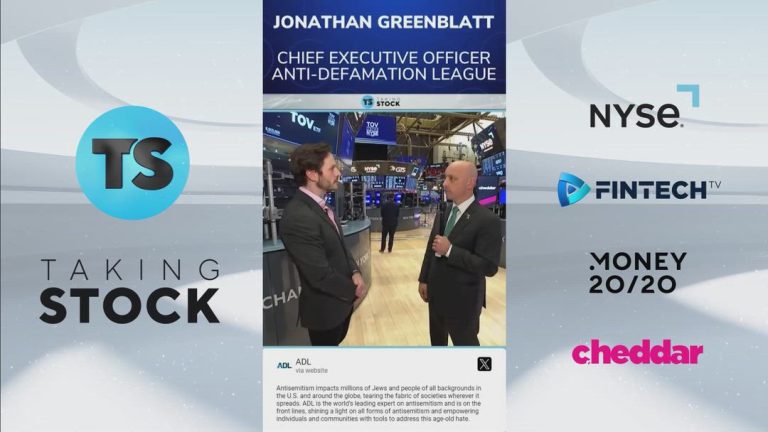
Jonathan Greenblatt, CEO of the Anti-Defamation League (ADL), marked a historic moment at the New York Stock Exchange by ringing the closing bell, coinciding with the launch of the organization’s new Exchange-Traded Fund, TOV. The event represented Greenblatt’s first appearance on the NYSE trading floor and underscored a broader effort to confront the sharp rise in antisemitism through financial markets and shareholder engagement.

Greenblatt described the moment as deeply meaningful, noting that entering the capital markets in this way was something he never imagined just a few years ago. The launch of the TOV ETF reflects a strategic expansion of the ADL’s mission, using investment capital as a tool to promote accountability and social responsibility. The fund is designed to support Jewish-owned businesses that have faced targeting from movements such as BDS and to appeal to investors who seek to align capital with values-driven action.

The initiative highlights a growing role for activism within financial markets. Over the past two years, the ADL has engaged in hundreds of proxy votes and actively opposed anti-Israel shareholder resolutions. Greenblatt emphasized that the organization’s goal is to transform investors into advocates by leveraging collective shareholder influence. This approach reflects a broader shift toward values-based investing, where financial participation is paired with civic responsibility and social impact.

Greenblatt addressed the broader context driving the launch, describing the current climate as a “complicated moment” for the Jewish community. He pointed to a surge in antisemitic incidents worldwide, including violent attacks during Hanukkah celebrations and rising threats in major cities. Against this backdrop, the ADL’s mission to confront hate both online and offline has taken on heightened urgency. Greenblatt stressed the importance of confronting hostility directly rather than retreating, encouraging communities to remain visible and engaged.

The discussion also highlighted increased reliance on organizations like the ADL as incidents of hate escalate. Greenblatt acknowledged that the past year has been especially challenging but emphasized the importance of standing firm. Individuals and institutions, he said, are increasingly turning to the ADL for protection, education, and advocacy during a period of profound uncertainty.

Hanukkah emerged as a central theme during the conversation, symbolizing endurance and resilience. Greenblatt reflected on the holiday’s historical meaning and its relevance today, noting that the menorah represents persistence through adversity. By marking this milestone at the NYSE during Hanukkah, the ADL sought to reinforce a message of strength and continuity in the face of rising intolerance.

Looking ahead, Greenblatt outlined the organization’s priorities, including expanding partnerships across communities and advancing tools to counter hate more effectively. He highlighted the role of generative AI in monitoring and combating online hate speech, pointing to the intersection of technology and advocacy as a critical frontier. These efforts demonstrate how emerging technologies can support social impact initiatives while aligning with broader trends in responsible investing.

The launch of the TOV ETF represents a significant evolution in the ADL’s strategy, extending its influence beyond advocacy into financial markets. Rather than focusing solely on returns, the ETF aims to harness shareholder power to challenge hate and promote accountability within corporate governance.

Greenblatt’s appearance at the New York Stock Exchange underscores the growing role of capital markets in advancing social causes. The TOV ETF serves as a model for how investment tools can be deployed in support of tolerance and inclusion, reinforcing the idea that economic participation and social responsibility are increasingly intertwined.

Slowing Jobs Market Could Set Stage for Fed Rate Cuts

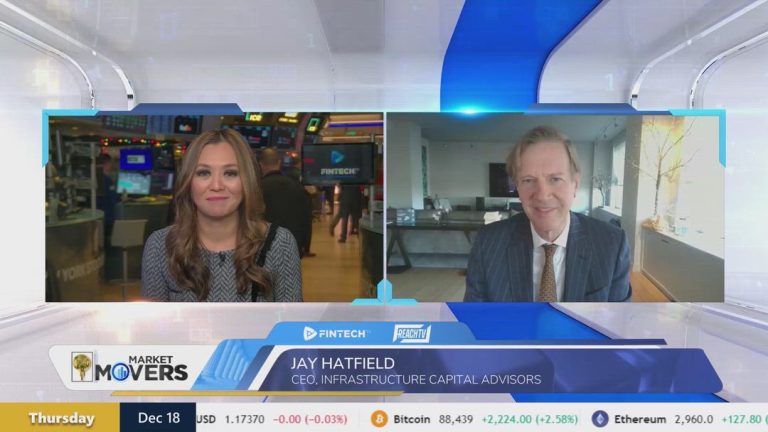
As markets approach 2026, shifting economic indicators are commanding increased attention from investors. A slowing economy, softer job creation, and a rising unemployment rate are beginning to influence expectations for Federal Reserve policy. Against this backdrop, Jay Hatfield, CEO of Infrastructure Capital Advisors, shared his outlook on inflation trends, equity markets, and investment positioning during a recent interview.

Hatfield focused on key macro indicators, particularly easing inflation and expectations surrounding Federal Reserve interest rate adjustments. He expressed a bullish outlook for equities, projecting the S&P 500 to reach 7,000 by year-end and potentially climb to 8,000 in 2026. This outlook is anchored in the expectation that the Personal Consumption Expenditures core inflation measure could fall below 2%, a development that would likely prompt three interest rate cuts by the Federal Reserve.

Recent labor data points to weakening employment conditions, contributing to more cautious sentiment among workers. Despite this, equity markets have responded positively. The S&P 500 has posted gains approaching 15% year-to-date, reflecting optimism that cooling inflation may outweigh concerns around slowing job growth. Hatfield cited a real-time PCE index indicating near-zero inflation in shelter costs, supporting his view that headline PCE readings could trend lower in the months ahead.

From an asset allocation standpoint, Hatfield emphasized opportunities within fixed income markets. He favors high-yield bonds and preferred stocks, noting that these instruments tend to outperform investment-grade bonds during bull markets. Infrastructure Capital Advisors manages two funds focused on these asset classes. As equity prices rise, Hatfield expects credit spreads on high-yield bonds to tighten, enhancing their appeal in the current environment.

The discussion also addressed fiscal policy considerations ahead of the 2026 midterm elections. Hatfield argued that modest tariffs, structured more like sales taxes than punitive trade barriers, could help support federal revenues. He estimates the budget deficit could decline to approximately $1.45 trillion, remaining below projected GDP growth of 5%. Reduced borrowing, he noted, could contribute to improved economic conditions, with tariffs adding an estimated 0.2% to growth.

Hatfield also identified sectors positioned to benefit in the coming year. He pointed to reasonably valued technology companies such as Marvel and Amazon, along with established financial institutions like Citizens Financial Group. He stressed the importance of engaging with the risk curve, suggesting that while defensive sectors offer stability, they may underperform more growth-oriented investments if bullish market conditions persist.

While Hatfield’s outlook remains constructive, he acknowledged downside risks. A resurgence in inflation or unexpected shifts in Federal Reserve policy could derail anticipated rate cuts. Such developments could pressure the housing market and reintroduce recession concerns if inflation proves more persistent than expected.

Overall, Hatfield outlined a strategic framework for investors navigating the path toward 2026. By focusing on inflation trends, positioning within high-yield fixed income, and selectively rotating into growth-oriented sectors, investors may be better equipped to manage market volatility. As inflation data, fiscal policy, and political dynamics continue to evolve, aligning portfolios with these macro forces will be critical to maintaining resilience and capturing potential upside.

Franklin Templeton Pushes AI-Driven Retirement Strategies for a New Era

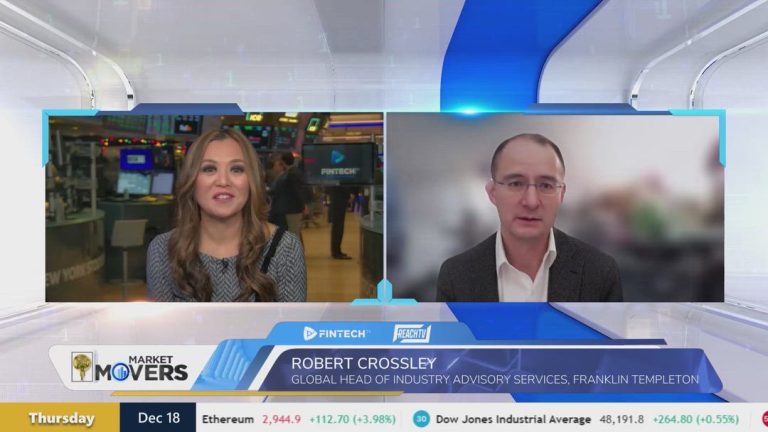
Americans are living longer than ever, a milestone that brings both celebration and mounting concern over the sustainability of traditional retirement systems. As employment patterns and life expectancy continue to evolve, Franklin Templeton is calling attention to the growing disconnect between conventional retirement structures and modern financial realities. Robert Crossley, Global Head of Industry Advisory Services at Franklin Templeton, outlined why retirement planning must adapt to meet the needs of a changing workforce.

Crossley explained that today’s retirement framework was designed for an era defined by long-term employment and predictable life spans. That model is increasingly outdated. Average job tenure has fallen to roughly 8 years for Baby Boomers and approximately 2 years for Generation Z. The rise of gig work and flexible employment models reflects a shift toward modular, on-demand careers, underscoring the urgency for retirement strategies that evolve alongside these changes.

To address these challenges, Franklin Templeton is exploring the use of artificial intelligence (AI) and blockchain technology to modernize retirement planning and improve personalization. Crossley noted that much of the existing retirement infrastructure is decades old, making it difficult to integrate advanced technologies. Personalization remains a core challenge, as financial needs vary significantly depending on life stage, income stability, and career trajectory. By leveraging AI, Franklin Templeton aims to deliver more tailored retirement solutions that serve both younger workers building savings and older individuals managing drawdowns.

One of the most pressing issues in retirement planning is the fragmented nature of current financial systems. Individual accounts often operate in isolation, limiting visibility and control. Crossley pointed to a shift toward wallet-based financial systems as a potential breakthrough. In a wallet-based model, assets are consolidated into a single, transparent platform where individuals can view, manage, and move funds more efficiently.

This approach extends beyond retirement planning alone. A wallet-based financial ecosystem allows users to oversee spending, saving, and investing in one integrated environment. Crossley emphasized that programmability is a key advantage, enabling software-driven management of both assets and liabilities. This structure offers greater flexibility and empowers individuals to make more informed financial decisions.

A central takeaway from Crossley’s perspective is that retirement solutions can no longer be standardized. As life spans lengthen and career paths diversify, financial strategies must reflect individual goals, timelines, and risk profiles. Franklin Templeton’s approach acknowledges that personalization is no longer optional but essential to maintaining retirement security.

Crossley’s insights highlight the need for continued innovation across the retirement industry. As financial institutions confront shifting demographics and economic realities, adopting new technologies will be critical to delivering sustainable outcomes. Integrating AI, blockchain, and personalized financial tools has the potential to reshape how individuals plan for long-term financial health.

Consumer preferences are also evolving, with growing interest in sustainability-focused investing. Incorporating these values into retirement strategies allows individuals to align financial goals with broader personal and social priorities. Technology-driven solutions, particularly wallet-based platforms, are expected to play a central role in this transition.

As the financial world becomes increasingly interconnected and digital, retirement planning must evolve in step. The vision outlined by Robert Crossley and Franklin Templeton points toward a future where personalized, technology-enabled strategies redefine retirement, helping individuals achieve greater financial wellness across every stage of life.

Bitcoin Volatility Returns as Investors Look Beyond Inflation Data

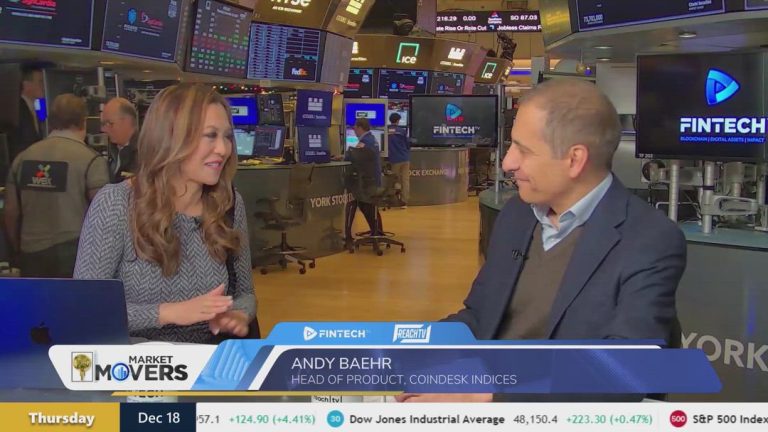
Bitcoin has recently regained notable momentum, climbing above the $89,000 level following unexpectedly mild U.S. inflation data. The move highlights the increasingly close relationship between macroeconomic indicators and digital asset prices. Despite the initial bullish reaction, Bitcoin’s rally quickly lost steam, prompting renewed analysis of its broader performance throughout 2023. Andy Baehr, Head of Product at CoinDesk Indices, offered insight into the shifting dynamics of the crypto market and shared his outlook for the year ahead.

Bitcoin began the year trading in the $93,000 to $94,000 range, setting elevated expectations across the market. As the year draws to a close, investors are closely tracking price action in both Bitcoin and Ethereum (ETH). Baehr emphasized the importance of quarterly performance, noting that it often shapes market sentiment and investor focus. Historically, Bitcoin’s momentum in one quarter can influence behavior in subsequent periods, a pattern that played out again this year.

According to Baehr, the structure of the crypto market has evolved significantly, particularly following the launch of Bitcoin Exchange-Traded Funds (ETFs). These products have helped expand adoption and bridge digital assets with traditional financial markets. While the first quarter of the year delivered strong activity, later quarters produced mixed results, creating a disconnect between major industry developments and price performance. As the market approaches the new year, uncertainty remains, with optimism continuing to play a critical role in investor decision-making.

Competition for investor attention across the digital asset landscape remains intense. Baehr pointed to recent developments involving Coinbase and Polymarket as examples of traditional financial mechanisms converging with blockchain infrastructure. This convergence reflects the evolution of financial products, with growing focus on innovations such as tokenized equities. The ability to tokenize traditional assets has the potential to enhance liquidity, broaden access, and attract a wider investor base.

Trading volumes on centralized exchanges also offer insight into shifting sentiment. Baehr noted that volumes have closely tracked price movements throughout the year. Record-high trading activity in August contrasted sharply with quieter conditions in November, as volatility subsided and traders grew cautious. This cooling suggests a market that has become increasingly skeptical of short-lived rallies amid persistent uncertainty.

Beyond Bitcoin, attention is expanding to Ethereum, Solana, and decentralized finance (DeFi) tokens. Baehr explained that investors are increasingly demanding clearer connections between digital asset valuations and real economic activity. For larger allocations to materialize, investors want stronger links between token prices and underlying use cases, including tokenization and on-chain activity across major blockchain platforms. Establishing those connections could encourage investors to move beyond minimal exposure and adopt longer-term strategies.

The cryptocurrency sector continues to offer opportunities for innovation as regulatory conditions improve and platforms refine their offerings. Baehr noted growing interest in sustainable investment frameworks within blockchain projects, particularly those aligned with Environmental, Social, and Governance principles and Sustainable Development Goals (SDGs). This convergence of sustainability and digital finance is becoming an increasingly relevant factor for institutional and long-term investors.

As the market transitions into 2024, cryptocurrency finds itself at a critical juncture. Bitcoin and Ethereum remain resilient but face ongoing challenges tied to volatility, macroeconomic conditions, and investor confidence. The broader narrative around digital assets continues to evolve, with growing focus on infrastructure, tokenization, and real-world utility. For investors, entrepreneurs, and market participants, the coming year is likely to shape the next phase of crypto’s role in global finance, driven by innovation across blockchain, AI, and sustainable investing.